
Walt Disney Logo Design: History & Evolution
Image Courtesy of Walt Disney
The Walt Disney logo design is one of the most recognizable identities in entertainment logo history. Its castle silhouette and handwritten-style signature evoke nostalgia, imagination, and storytelling. Over decades, the mark evolved from black-and-white typography into the cinematic animation shown before Disney films today.
Each redesign reflects its era and Disney’s growth into a global entertainment company. For designers, branding enthusiasts, and fans, its evolution shows how a visual identity can build emotional connections while remaining adaptable. Here is how Disney transformed a signature into an enduring symbol in brand logo history.
Walt Disney Logo Design History
1928 - 1937
The original Walt Disney logo design reflected the company’s focus on animation and storytelling. Mickey Mouse stood at its center, with his name split on either side to create balance and make the character the focal point.
Inscriptions such as “Walt Disney Productions” and the company address supplied practical details while establishing its identity. More than a simple mark, the design presented the mascot, business, and creative mission together. It remains an early example of using a brand’s core offering and personality to tell a clear visual story.
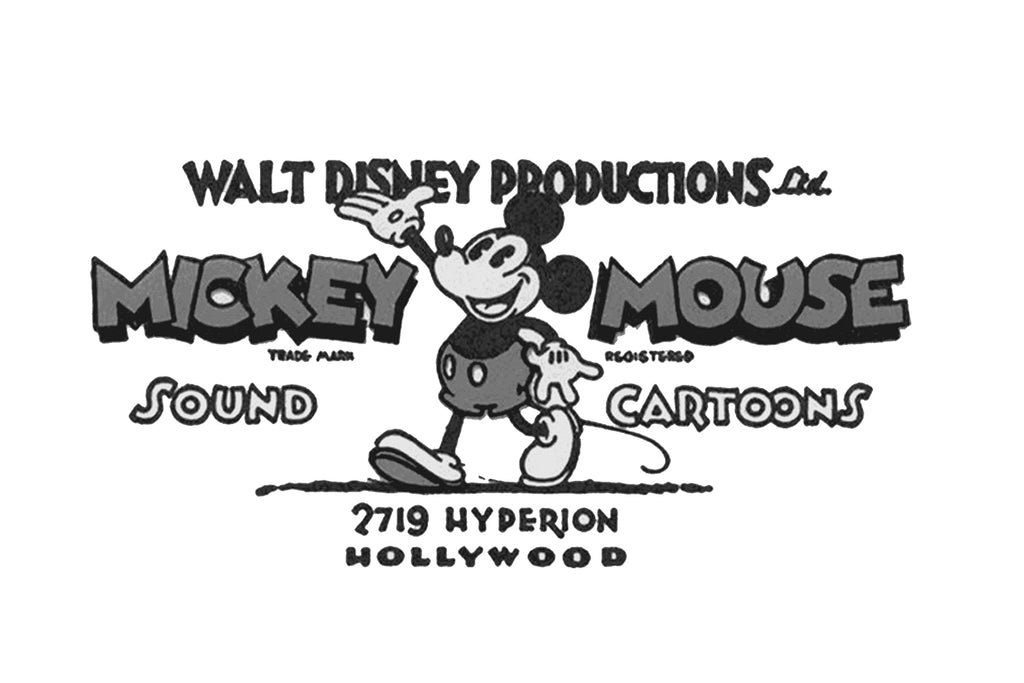
Image Courtesy of Walt Disney
1937 - 1948
From 1937 to 1948, the logo shifted toward a more expressive treatment built around the founder’s name. Its flowing script remained readable while introducing curves and flourishes associated with Disney’s creative character. One quirk was the “t” in “Walt,” which could resemble a “y.”
The design reflected a maturing brand without losing its playfulness. Its balance of personality and legibility also demonstrated how typography could communicate both imagination and growing sophistication.
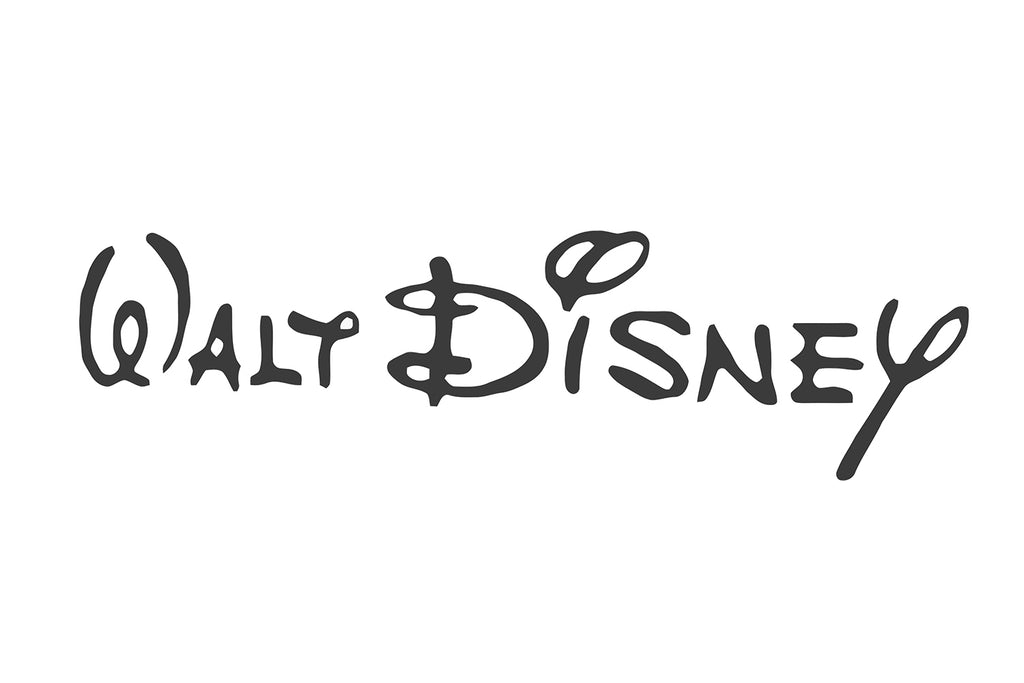
Image Courtesy of Walt Disney
1948 - 1979
Between 1948 and 1979, the Walt Disney logo adopted a refined, stylized appearance that differed sharply from earlier versions. Its intricate lettering looked sophisticated but was difficult to read, placing artistic expression ahead of immediate clarity.
The enigmatic design suited a company exploring a broader world of entertainment and imagination. For designers, it illustrates the tension between distinction and communication: unconventional forms can make a strong statement, but complexity may weaken legibility.
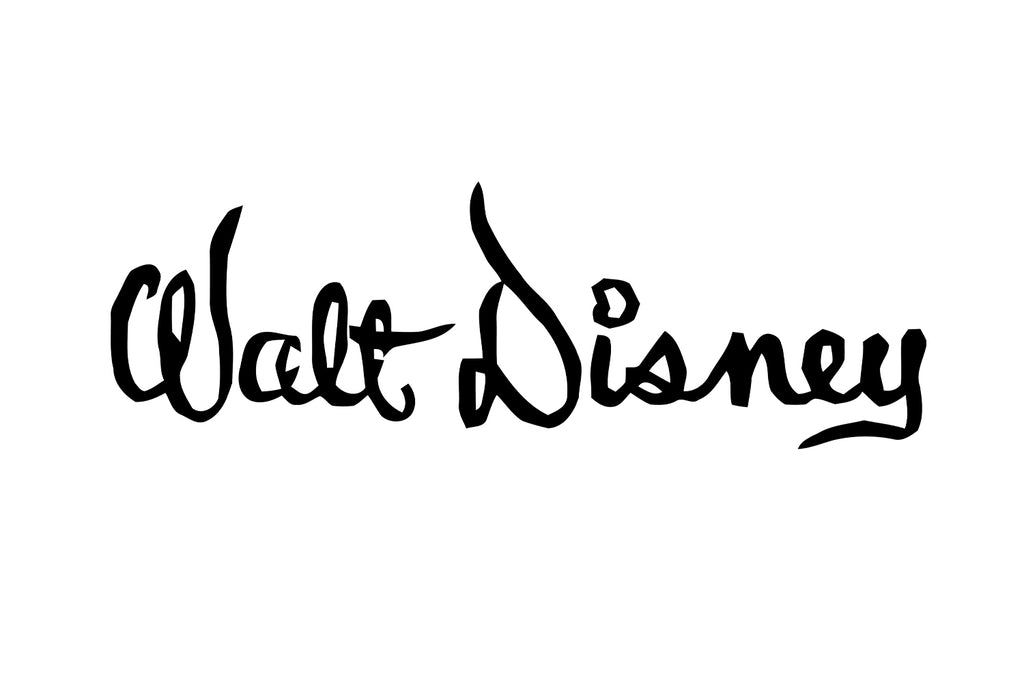
Image Courtesy of Walt Disney
1972 - 1983
The 1972–1983 design returned to the charm of the original wordmark while improving its legibility. Beneath the clearer Disney script, “Productions” appeared in a simple sans serif typeface. The contrast separated the distinctive brand name from its practical descriptor.
This update shows how returning to familiar roots can revitalize rather than regress a brand. With modest refinements, Disney preserved its established personality while making the identity clearer for a new generation.
Image Courtesy of Walt Disney
1983 - 1985
From 1983 to 1985, the familiar “Walt Disney” lettering remained, but “Productions” became “Pictures.” The new descriptor used a larger, more pronounced serif typeface.
The wording emphasized Disney’s cinematic identity, while the serif styling added authority and heritage. Though subtle, the revision shows how typography and terminology can shift brand perception without replacing an established wordmark.
Image Courtesy of Walt Disney
1985 - 2006
In 1985, Cinderella’s castle appeared above the unchanged “Walt Disney” lettering, while “Pictures” remained below in a slightly larger serif font. The castle captured the fairy-tale magic, dreams, creativity, and storytelling central to Disney’s identity.
Integrating such a powerful image without overwhelming the wordmark was a careful exercise in balance. The result turned the logo into more than an identifier: it became an emotional promise of imagination and wonder.
Image Courtesy of Walt Disney
2006 - 2011
From 2006 to 2011, the castle became more detailed and dimensional. Defined towers, glowing rooms, richer color, and cinematic movement heightened its grandeur. Meanwhile, “Walt Disney Pictures” became smaller, giving the castle greater visual prominence.
The redesign used detail, scale, and proportion to guide attention while keeping the name visible. It demonstrated how established symbols can gain depth and atmosphere through technology without losing their essential identity.
Image Courtesy of Walt Disney
2011 - Present
In 2011, Disney simplified the identity by removing everything below the castle except the word “Disney” in its iconic script. The confident reduction signaled that the brand no longer needed a fuller explanation.
This version demonstrates the strength of minimalism and brand equity. By retaining only its most recognizable elements, Disney preserved its heritage and personality in a cleaner form suited to contemporary applications.
Image Courtesy of Walt Disney
What Does The Castle Symbol Represent In Walt Disney Logo Design?
The castle is the visual heart of the Walt Disney logo design. Rising against a twilight sky, it signals the brand and the promise of magic before a story begins. Its lasting power comes from several connected meanings.
A Kingdom Of Imagination
At its core, the castle represents imagination. Disney built its identity on storytelling, fantasy, and dreams coming true, and castles anchor classic fairy tales such as Cinderella and Sleeping Beauty. The symbol tells viewers they are entering a world where ordinary limits no longer apply.
A Tribute To Disney Theme Parks
The emblem also connects with Cinderella Castle at Walt Disney World and Sleeping Beauty Castle at Disneyland. Placing a castle at the center of the logo bridges Disney’s films, television, and physical destinations. Like a park entrance, it functions as a gateway into the wider Disney experience.
Magic, Wonder, And Emotional Connection
The castle feels elegant and welcoming rather than corporate. Its glowing lights, arched towers, and shooting star create anticipation before the opening scene. These cues prepare audiences for adventure, emotion, and imagination, allowing the logo to establish a mood as well as identify the company.
Evolution Of The Castle Design
The castle has evolved alongside technology. Early versions were flat and simple; later ones introduced color, dimensional lighting, detailed textures, camera movement, and orchestral sound. Yet the underlying symbol remained consistent. This balance of technical innovation and visual continuity keeps the identity current without discarding its history.
A Symbol Of Brand Authority
Castles also suggest stability, protection, and legacy. For Walt Disney, the structure reflects the company’s established position in global entertainment while communicating trust and heritage through a magical aesthetic.
Ultimately, the castle represents dreams, storytelling, and endurance. More than decorative architecture, it turns the Walt Disney logo design into a cinematic promise that each story begins where magic lives.
Continue Reading
- DC Comics Logo Design: History & Evolution
- Discovery Channel Logo Design: History & Evolution
- DreamWorks Animation Logo Design: History & Evolution
- ESPN Logo Design: History & Evolution
- Fox News Logo Design: History & Evolution
How Walt Disney’s Signature Became a Wordmark
From Personal Signature to Brand Symbol
The famous wordmark is associated with Walt’s handwriting, but it is a stylized interpretation rather than a perfect copy of one signature. Walt wrote his name in different ways over the years. The commercial mark refined that handwriting into a consistent form for films, products, signs, and print.
Handwritten lettering suggests authorship, personality, and human involvement. It connects the company to a storyteller rather than an anonymous institution—a fitting quality for a brand built around imagination, characters, and emotion.
Versions of Walt’s scrawl appeared in company graphics and stationery before the treatment became standardized. Repetition turned the script into an independent symbol; viewers eventually recognized its overall shape without reading every letter.
Why the Lettering Remains Distinctive
The wordmark avoids the regular rhythm of ordinary type. Its looping “D” makes a strong opening gesture, while compact middle letters form a dense unit. Rounded strokes feel friendly, and extended shapes add movement.
The unconventional letterforms explain why first-time viewers sometimes misread the name, especially the capital “D.” Yet decades of exposure have made the silhouette memorable. Its strangeness is an advantage: a generic script might be easier to read at first glance but much easier to forget.
The Design Elements Behind the Logo’s Recognition
The Castle Silhouette
The castle’s towers, pointed roofs, and gateway read almost instantly. Its contour survives at small sizes; symmetry adds stability, while varied tower heights prevent rigidity.
The Arc and Star
The arc frames the castle and guides the eye. Whether read as a shooting star or magical gesture, it turns the logo into an event and reinforces ideas of wishes and transformation.
The Handwritten Typography
The wordmark balances the monumental castle. Its rounded handwriting adds warmth and individuality, joining a vast entertainment world with the creative personality associated with Disney’s founder.
Color, Movement, and Sound
Blue suggests night and dreams; white and gold light create wonder. Fireworks add celebration, camera movement creates scale, and music builds emotional recognition. Together, they make the sequence stronger than a static mark.
Frequently Asked Questions
Is the Disney Logo Walt Disney’s Real Signature?
The Disney wordmark is inspired by lettering associated with Walt Disney, but it should not be treated as an exact copy of one everyday signature. His handwriting varied, while the brand version was refined into a consistent graphic form. That standardization made the name easier to reproduce across films, products, signs, and other applications.
Which Castle Is Featured in the Walt Disney Logo?
The early film emblem is commonly associated with Disneyland’s Sleeping Beauty Castle. The detailed 2006 redesign draws more strongly from Cinderella Castle at Walt Disney World. Neither version is simply an architectural portrait; each combines recognizable park references with simplified or imagined details designed to create an ideal fairy-tale symbol.
When Was the Disney Castle Logo First Used?
The Walt Disney Pictures castle identity began appearing in 1985. A shortened version accompanied Return to Oz, while the complete animated presentation and fanfare appeared with The Black Cauldron later that year. Before the castle era, Disney films generally relied on studio-name title cards and individual opening-credit treatments rather than one standard cinematic emblem.
Why Does the Disney Logo Change Before Some Movies?
Customized versions help establish a film’s mood before the story begins. Disney may alter the sky, colors, music, scenery, architecture, or transition while retaining familiar elements such as the castle, arc, and script. This balance lets the sequence support an individual film without weakening recognition of the larger Disney identity.
Conclusion
The Walt Disney logo evolved from changing studio lettering into a layered identity built around a signature-inspired wordmark and a cinematic castle. Its lasting strength comes from the relationship between those elements: one feels personal and authored, while the other opens the door to an imaginative world. Later redesigns added richer animation, sound, scale, and film-specific variations without erasing the familiar structure. By protecting its most meaningful assets while adapting their presentation, Disney created a logo that continues to feel recognizable, flexible, and emotionally charged across generations.
You May Also Like
- Warner Brothers Logo Design: History & Evolution
- YouTube Logo Design: History & Evolution
- 20th Century Studios Logo Design: History & Evolution
- BBC Logo Design: History & Evolution
- Cartoon Network Logo Design: History & Evolution
Let Us Know What You Think!
Every information you read here are written and curated by Kreafolk's team, carefully pieced together with our creative community in mind. Did you enjoy our contents? Leave a comment below and share your thoughts. Cheers to more creative articles and inspirations!
Related Articles


Leave a Comment