
Hermès Logo Design: History & Evolution
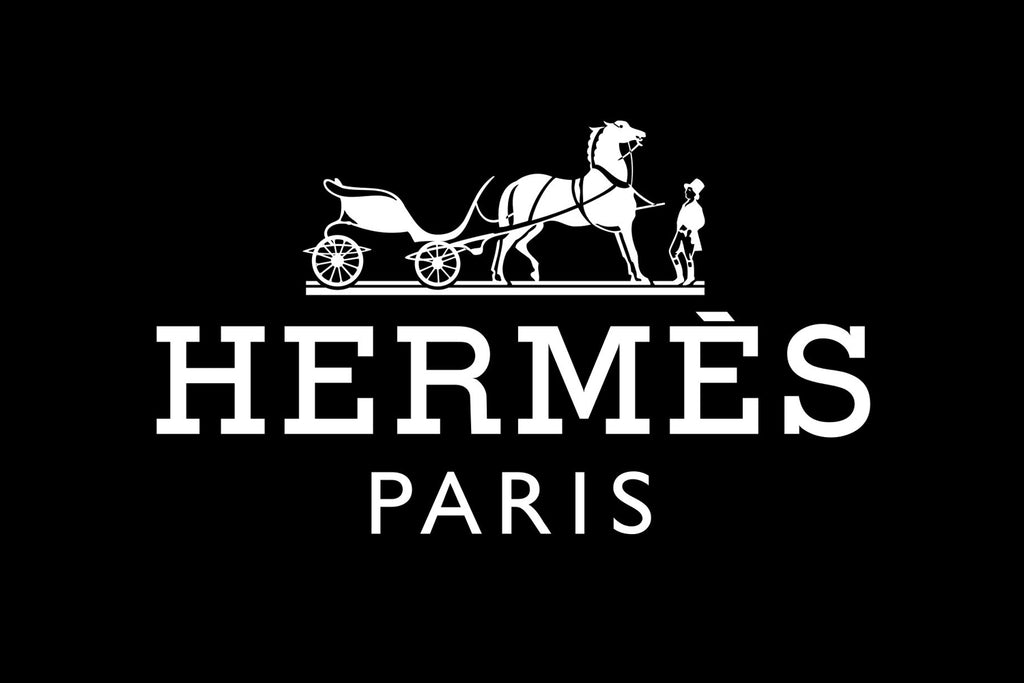
Image Courtesy of Hermès
Founded in 1837 as a harness workshop in Paris, Hermès has grown into one of the world’s most prestigious luxury houses. Its iconic logo design reflects that journey through a distinctive horse-and-carriage emblem, classic typography, and a visual identity rooted in craftsmanship and heritage.
Unlike brands that frequently reinvent themselves, Hermès has embraced continuity. Its logo pays homage to the company’s equestrian roots while remaining relevant across generations. The restrained typography and recognizable orange color palette reinforce an identity that feels both luxurious and authentic.
For design enthusiasts, branding professionals, and luxury fashion fans interested in fashion luxury logo history, the Hermès logo offers a valuable example of how strong visual storytelling can endure without constant redesign.
Hermès Logo Design History
1950s - Present
Long before Hermès became known for leather goods, fashion, perfumes, and jewelry, Thierry Hermès founded the company as a Paris harness workshop. Its equestrian beginnings remain essential to understanding its place in brand logo history.
Thierry’s son, Charles-Émile, later expanded the family business into saddlery. The introduction of the Haut à Courroies bag, originally designed for horse riders, helped move Hermès toward the luxury leather goods for which it would eventually become famous.
In the 1950s, the familiar Hermès logo design emerged: a Duc carriage drawn by a horse. The choice directly referenced the company’s saddlery heritage and connected its origins with its expanding luxury identity.
The emblem was inspired by “le Duc Attele, Groom a L'Attente” (“Hitched Carriage, Waiting Groom”), a work by French portrait and animal painter Alfred de Dreux (1810 -1860). The resemblance between the historical artwork and the Hermès emblem clearly reflects how the brand translated equestrian imagery into a lasting visual signature.
From the 1950s to the present, the emblem has remained remarkably consistent, reinforcing Hermès’ commitment to heritage, craftsmanship, and timeless design.
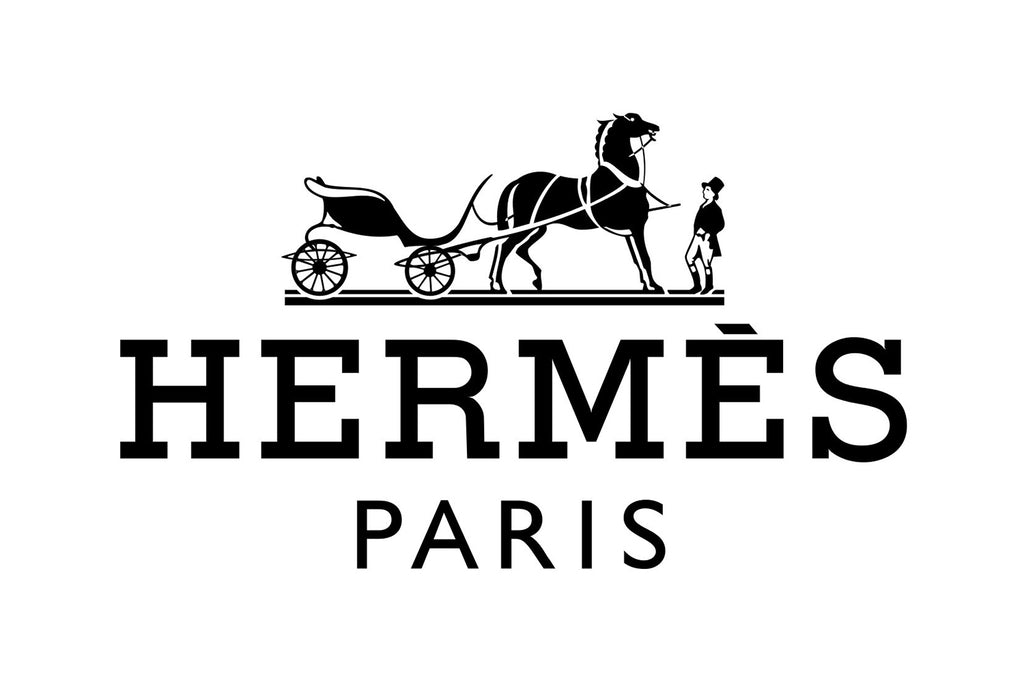
Image Courtesy of Hermès
The Story Behind the Horse-and-Carriage Emblem
Inspiration for the Duc Carriage Symbol
The best-known Hermès emblem depicts a horse standing beside a carriage with a groom nearby. The image is commonly associated with the company's “Duc” carriage motif and was inspired by nineteenth-century equestrian imagery.
The composition immediately communicates the world from which Hermès originated. The horse refers to the company's early equestrian products, while the carriage reinforces the connection to travel, craftsmanship, and the refined lifestyle of its original clientele.
The groom adds another layer to the image. Instead of presenting the horse and carriage as static decorative objects, the human figure suggests preparation, care, and service.
That is particularly appropriate for a company whose reputation was built through skilled handwork.
Why There Is No Passenger in the Carriage
One of the more noticeable details in the emblem is that the carriage does not contain a visible passenger.
This has sometimes been interpreted as leaving space for the customer, suggesting that Hermès prepares the craftsmanship while the client determines where it ultimately goes. It is an appealing interpretation because it fits the relationship between luxury craftsmanship and its owner.
However, such symbolic explanations should not be treated as more definite than the historical evidence allows. The clearest meaning of the emblem remains its direct reference to Hermès' equestrian origins.
What the Emblem Communicates
The image naturally suggests heritage, movement, craftsmanship, and refinement.
More importantly, those associations come from the company’s actual history. That authenticity helps explain why the emblem has remained effective even as Hermès developed into a global luxury house.
Continue Reading
- Tommy Hilfiger Logo Design: History & Evolution
- Valentino Logo Design: History & Evolution
- Versace Logo Design: History & Evolution
- Yves Saint Laurent Logo Design: History & Evolution
- Balmain Logo Design: History & Evolution
The Typography Behind the Hermès Wordmark
A Classical Serif Appearance
The Hermès wordmark uses uppercase lettering with a traditional serif character, giving it a formal and established appearance.
Serifs provide small structural details at the ends of letterforms, creating a visual connection with classical typography and traditional print culture. In the Hermès identity, this treatment complements the historical tone of the carriage emblem.
The lettering is also relatively restrained.
It does not rely on dramatic decorative effects to communicate luxury. Instead, carefully proportioned capitals and generous visual clarity create a sense of confidence.
This simplicity is especially useful because the wordmark appears in many different contexts, from storefronts and packaging to product markings.
The Importance of “Paris”
The word “PARIS” beneath or alongside the Hermès name reinforces the house’s French identity.
Paris has long been associated internationally with fashion, luxury craftsmanship, and design. Including the city therefore provides both geographical information and cultural context.
Together, HERMÈS PARIS functions almost like a compact brand signature, remaining recognizable even when the carriage emblem is not present.
Why Orange Became Closely Associated With Hermès
From Packaging to Brand Recognition
Although the horse-and-carriage emblem and wordmark form the core of the logo, color plays an equally important role in the wider Hermès identity.
Orange became especially recognizable through the brand’s packaging. Hermès boxes, bags, and ribbons made the color increasingly familiar to customers, eventually allowing the shade itself to function as a visual signal of the brand.
This illustrates an important distinction between a logo and a broader visual identity.
A consumer does not necessarily need to see the full Hermès emblem to recognize the brand. A distinctive orange box combined with restrained typography can already provide strong recognition.
How Orange Complements the Logo
Orange gives Hermès a visual quality that separates it from many luxury brands that rely heavily on black, white, gold, or neutral palettes.
At the same time, the logo itself is often presented in darker, more restrained tones, creating a strong contrast against the brighter packaging.
The combination works because each element plays a different role.
The carriage emblem communicates history. The typography provides a clear name. The orange color delivers immediate visual recognition.
Together, they create an identity that feels richer than any one element could achieve alone.
What Makes The Hermès Logo Design Timeless And Luxurious?
The Hermès logo design feels timeless because it relies on heritage, symbolism, typography, and consistency rather than short-lived visual trends. Its horse-and-carriage emblem preserves a direct connection to the company’s beginnings in equestrian craftsmanship, giving the identity authenticity that cannot easily be replicated.
The combination of a detailed emblem and restrained serif wordmark also creates balance. The typography communicates tradition without excessive decoration, while the historical symbol gives the identity a distinctive story. Together, they provide enough character to be recognizable without relying on fashionable effects.
Color strengthens that recognition. Although the logo itself is often presented in black, Hermès is strongly associated with its signature orange packaging. The contrast between classical branding and vibrant orange gives the company a visual identity that is immediately identifiable while still feeling refined.
Consistency is another important factor. Instead of repeatedly redesigning its logo to appear contemporary, Hermès has kept its core visual elements intact. Seeing the same emblem across decades reinforces familiarity, stability, and heritage.
Ultimately, the Hermès logo design remains luxurious because of its restraint. It does not need to chase trends or continually introduce new visual ideas. Through meaningful symbolism, classical typography, distinctive color, and long-term consistency, Hermès demonstrates how an identity can remain relevant by staying connected to its origins.
What Designers Can Learn From the Hermès Logo
Build Identity From Authentic Brand History
One of the most useful lessons from the Hermès identity is that meaningful branding often begins with genuine history.
The horse-and-carriage emblem works because it is not an arbitrary symbol chosen to create an impression of luxury. It directly reflects the work that originally established the company.
Brands with distinctive origins can often find stronger visual ideas by examining their own history before searching for generic symbols.
Evolution Does Not Always Require Reinvention
The Hermes logo evolution also shows that change does not automatically require replacing a familiar identity.
A well-established logo can evolve through typography, spacing, reproduction, and application while preserving the visual elements people already recognize.
For heritage-oriented brands especially, continuity may be more valuable than novelty.
Let Different Brand Elements Work Together
Hermès also demonstrates the importance of designing an identity as a system.
The carriage emblem, wordmark, typography, and orange packaging do not need to appear together every time. Each element is recognizable enough to support the others.
This flexibility allows Hermès to adapt its identity to everything from a tiny product stamp to a storefront without losing its overall character.
Frequently Asked Questions
What Does the Hermès Logo Represent?
The Hermès logo represents the company's equestrian origins. Its horse, carriage, and groom reference the harness and saddlery craftsmanship that defined the early business. Beyond that historical connection, the emblem now communicates broader qualities associated with Hermès, including craftsmanship, heritage, refinement, and continuity.
Why Does the Hermès Logo Feature a Horse and Carriage?
Hermès originally specialized in equipment for horses and carriages, making equestrian imagery a natural part of its visual identity. The motif therefore reflects genuine company history rather than being a decorative symbol created simply to suggest luxury or prestige.
Has the Hermès Logo Changed Much Over Time?
The Hermès logo has remained unusually consistent compared with many major fashion identities. Its equestrian imagery and recognizable wordmark have continued to play central roles, while most changes have involved refinement, typography, proportions, reproduction, and how the identity is applied across different products and media.
What Does the Hermès Orange Color Mean?
Hermès orange is primarily associated with the brand through its distinctive packaging. Over time, repeated use turned the color into an important recognition device. Combined with the Hermès wordmark and carriage emblem, the orange packaging helps create a visual identity that consumers can often recognize immediately.
Conclusion
The Hermes logo history shows how a visual identity can evolve without losing the qualities that made it distinctive in the first place. The horse-and-carriage emblem preserves a direct connection to Hermès' equestrian beginnings, while the refined wordmark, traditional typography, and signature orange packaging extend that heritage into modern applications.
For designers, the most valuable lesson may be its restraint. Hermès demonstrates that strong branding does not always require continual reinvention. When a symbol comes from authentic history and is applied consistently, preserving it can become one of the most powerful parts of the brand itself.
You May Also Like
- Louis Vuitton Logo Design: History & Evolution
- Marc Jacobs Logo Design: History & Evolution
- Michael Kors Logo Design: History & Evolution
- Prada Logo Design: History & Evolution
- Ralph Lauren Logo Design: History & Evolution
Let Us Know What You Think!
Every information you read here are written and curated by Kreafolk's team, carefully pieced together with our creative community in mind. Did you enjoy our contents? Leave a comment below and share your thoughts. Cheers to more creative articles and inspirations!
Related Articles


Leave a Comment